
Tree Blog
Our Blog
French Drains vs. Land Clearing in Sioux City: Costs and When Clearing Helps
Stop the Backyard Swamp: Start with the Right Fix
Backyard drainage problems in Sioux City are no joke. After a late-summer thunderstorm, many yards turn into mud pits, kids bring wet grass into the house, and low spots stay soggy for days. Sometimes that extra water even shows up where you really do not want it, like around tree roots or seeping into the basement.
When that happens, a lot of homeowners jump straight to big, heavy fixes like tearing up half the yard or doing major land clearing. In many cases, a well-planned French drain or other targeted drainage work would solve the problem with less disruption. The tricky part is knowing which approach your yard actually needs.
In this article, we will walk through how to spot the difference between a yard that needs a French drain, one that really does need land clearing in Sioux City, and when a mix of both is smartest. We will also look at how trees, roots, and overgrown areas play into drainage problems, and why getting those checked first can save time, money, and stress.
How Sioux City Yards Really Get Waterlogged
Our area has some common traits that make drainage tricky. Many Sioux City yards have compacted, clay-heavy soil. Clay does not let water soak in very quickly, so heavy rain tends to sit on top and find the lowest spot. Older neighborhoods may also have grading that has shifted over time, so water that once flowed away now runs toward the house or a neighbor’s fence.
Some of the most common causes of waterlogged yards include:
Compacted clay soil that sheds water instead of soaking it in
Downspouts dumping roof runoff right next to the foundation
Low spots from settling or past construction work
Patios, driveways, or sidewalks that channel water into the yard
Trees and plants are part of the story too. Healthy trees can pull a lot of moisture from the soil, which helps during wet periods. Thick brush, decaying stumps, and tangled roots, on the other hand, can block natural water paths. Roots can raise sections of ground, forcing water to pool in new places, while old stumps and brush piles can act like little dams.
As late summer shifts toward fall, the ground is still soft enough for trenching or clearing, but seasonal storms can really expose problem areas. If you see the same puddles every time it rains, that is a warning sign. Long-term wet spots are more than an annoyance. They can:
Weaken tree roots and raise the risk of trees uprooting in wind
Encourage mold and mildew near foundations
Create mosquito breeding areas
Hurt the look and value of the property
Fixing drainage the right way protects both your trees and your home.
When a French Drain Is the Smarter First Step
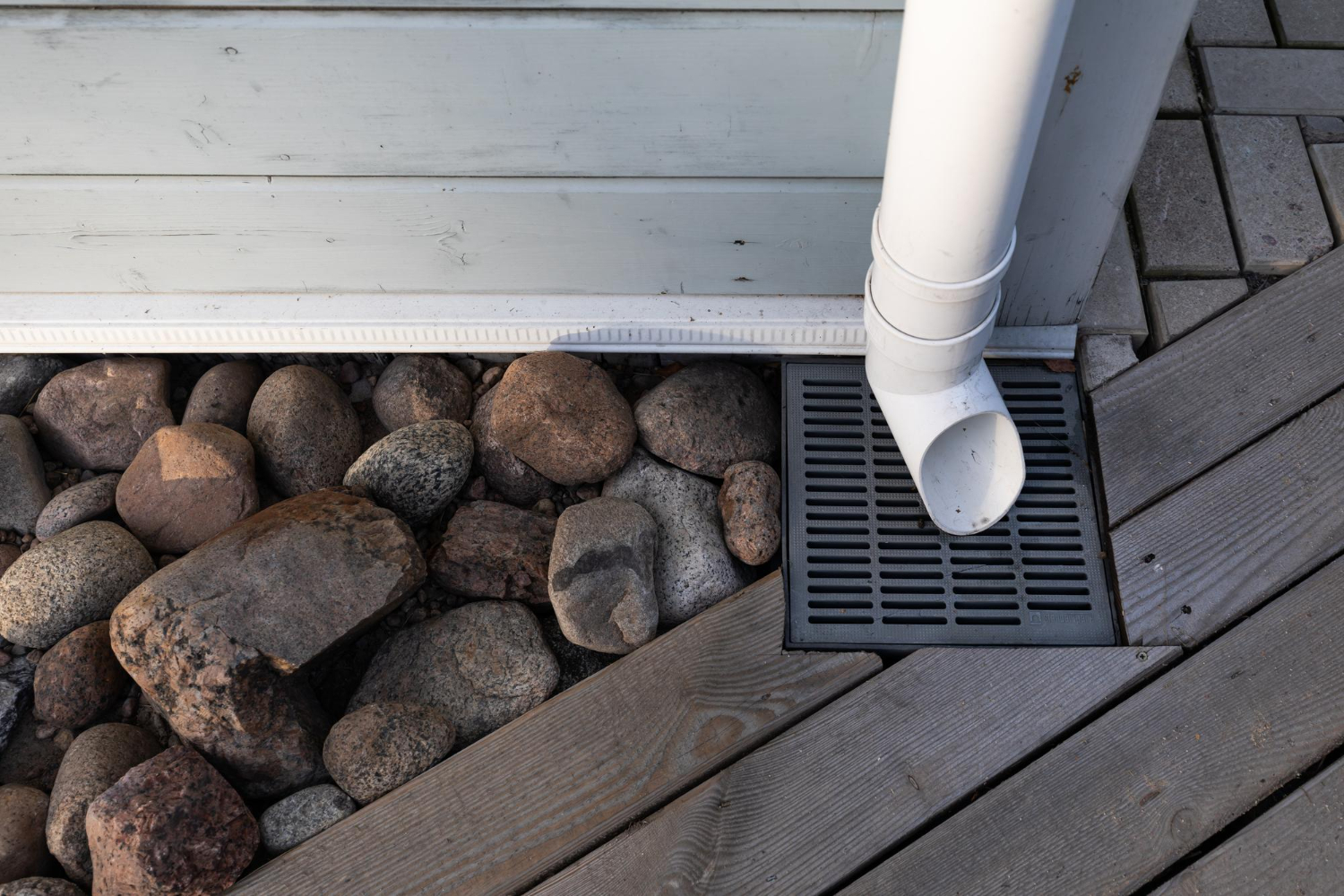
A French drain is a simple idea that can solve stubborn water problems. It is basically a gravel-filled trench with a perforated pipe at the bottom. Water enters through the gravel, flows into the pipe, and is carried away to a better spot, like a ditch or another safe discharge area.
French drains often make sense when water is collecting in one area instead of across the whole property. Signs that a French drain might be the better first move include:
Standing water along one side of the house or around the foundation
A soggy strip along a sidewalk, driveway, or fence line
Water showing up in the basement or crawl space during storms
A wet low spot at the bottom of a slope while the rest of the yard looks fine
The cost of a French drain can change a lot depending on things like trench length, trench depth, the materials used, and how much of the existing landscape needs to be removed and put back. Roots, stumps, and buried debris can also affect how tricky the job will be.
Tree care and drainage work are closely connected. Before anyone starts trenching, it is smart to look at:
How close the trench will be to major tree roots
Whether roots can be cut without putting the tree at risk
If old stumps or roots need grinding before a pipe can be laid
If digging severs too many roots on one side of a mature tree, it can become unstable or slowly decline. Having someone who understands tree structure involved in planning a French drain helps protect both your drainage fix and your shade trees.
When Land Clearing in Sioux City Is Actually Needed
People hear “land clearing” and think of big fields or new construction. For a homeowner, land clearing in Sioux City usually means something more focused. It can include removing multiple problem trees, thick brush, and stumps so the yard can drain, get more light, and stay easier to maintain.
Here are red flags that point toward clearing as the right or necessary move:
The yard is so overgrown that sunlight barely reaches the ground
Water sits behind brush piles, fallen branches, or old stumps
Trees lean into ditches, creeks, or drainage swales and block flow
Roots and low limbs create a wall that traps runoff on your property
In these cases, even the best French drain will struggle if water cannot reach it because vegetation is acting like a barrier. Clearing selected trees, brush, and debris opens natural channels so gravity can do some of the work.
Costs for land clearing are shaped by several factors, such as:
Number, height, and diameter of trees to be removed
How steep or uneven the ground is
How easily equipment can access the work area
Hauling and disposal needs for logs, chips, and debris
Any follow-up grading, seeding, or erosion control
Early fall is often a good window for clearing. Temperatures are easier on workers and equipment, some leaves have dropped so structure is easier to see, and there is still time to stabilize bare soil before deep freezes and snow.
Head-to-Head: French Drains vs. Clearing vs. Both
So which fix is right for your yard? It helps to think about whether your main problem is “where water collects” or “what is blocking it.”
A French drain by itself usually fits when:
You have one or two clear wet zones
Most trees look healthy and there is decent sunlight
Water issues seem tied to roof runoff and grading near the house
Land clearing by itself can be enough when:
The lot is packed with brush, vines, and dead or failing trees
Dense vegetation is acting like a dam between you and a ditch or field
Removing a few key trees and stumps would open obvious flow paths
Many Sioux City properties fall into a middle ground. In those yards, a hybrid plan works best. That might look like:
Removing selected problem trees or brush that block runoff
Grinding stumps in the way of natural or planned drainage lines
Then adding a French drain, small swale, or minor re-grading to guide water to a safe outlet
A simple way to think about it is:
Start with a full look at drainage and tree health.
Rule out small fixes first, such as moving downspouts or adding soil in tiny low spots.
If water is collecting in a specific place and has somewhere clear to go, think French drain.
If water is getting trapped by trees, roots, or brush, think land clearing.
If both are true, plan limited clearing plus targeted drains or grading.
Get a Tree-Smart Drainage Plan Before Winter Hits
Late summer and early fall are a smart time to deal with soggy yards, leaning trees, and overgrown corners. Ground access is easier before freeze, and you get ahead of winter snowmelt and spring storms that can make drainage problems worse.
At Sioux City Tree Co., we focus on how trees, roots, and overgrowth affect the way water moves across your property. We can walk your yard, look at tree health, root spread, and problem areas, and then work alongside drainage pros or help you understand what type of fix makes the most sense. Many homeowners are relieved to learn they do not need full land clearing in Sioux City, just careful tree work and a smarter path for water.
When heavy rain is in the forecast, take a few photos or notes of where the water goes and what stays wet longest. That real-world view, combined with a tree and drainage assessment, makes it much easier to build a step-by-step plan. Start with the biggest risks, such as unstable trees and water close to the foundation, then tackle long-term improvements and nicer landscaping when the weather warms again.
Choosing the right mix of French drains and targeted clearing now helps protect your trees, your yard, and your foundation, and it keeps your backyard a place you can actually enjoy in every season.
Get Your Land Ready For What Comes Next
Whether you are planning a new build, expanding your yard, or reclaiming overgrown property, we are ready to help you move from idea to action. Our professional land clearing in Sioux City service is designed to safely and efficiently prepare your space for its next chapter. Reach out to Sioux City Tree Co. today to discuss your goals, get straightforward answers, and schedule your project. If you are ready to take the next step, simply contact us and we will follow up promptly.

(605) 690-5077 | siouxcitytreeco@gmail.com
3311 S Clinton St, Sioux City, IA
Home | Get a Quote | Privacy Policy | Terms of Service | Contact | Blog
© 2026 Sioux City Tree Co. - All rights reserved.
Created by Showcase 712