
Tree Blog
Our Blog
What Wind Damage Reveals About Tree Care in Sioux City
Spring wind in Sioux City has a way of telling the truth about trees. A calm-looking maple or cottonwood can suddenly drop branches, lean, or even uproot after one strong storm. That damage is not random. It is a sign that something inside the tree was already weak. When we pay attention to what the wind reveals, we can prevent many of the worst problems next time.
In this article, we will walk through what wind damage can show about tree health, structure, and past care. We will also explain how professional tree work turns those storm “lessons” into a safer, healthier yard instead of a repeating cycle of cleanup and worry.
When Spring Storms Expose Hidden Tree Problems
In our area, spring usually brings strong gusts, fast-moving thunderstorms, and plenty of rain. The soil gets soft, the wind picks up, and trees that stood all winter suddenly face a serious test. That test often comes just when people are starting to think about yard projects and outdoor plans.
Wind is like a stress test for trees. It can reveal:
Cracks hidden under bark
Internal decay that never showed on the outside
Weak branch unions where two limbs press tightly together
Old, bad pruning cuts that never healed right
Every wind event acts like a free inspection. The trees that bend and spring back are usually in better shape. The ones that drop branches or start leaning are sending a clear message: something is wrong, and it was wrong before the storm hit.
Local knowledge matters here. In Sioux City, certain species, soil types, and planting spots are more likely to fail in wind. Shallow roots in wet lawns, old trees in compacted soil, and overgrown trees near houses all react differently. Understanding that pattern is how we decide which trees need attention before the next big gust.
What Broken Branches Say About Tree Health
After a storm, the first thing many homeowners see is branches on the ground or hanging in the canopy. Those broken limbs are not all the same. The way a branch fails can tell a lot about the health and structure of the tree.
Common signs include:
Snapped limbs that look cleanly broken
Hanging “widowmakers” lodged high in the canopy
Shredded or peeled branches with long splinters
Repeated breakage on the same side of the tree
Clean breaks often show a heavy, unbalanced canopy. The tree may be carrying too much weight at the tips because it has not been pruned in years. In strong wind, that extra weight is the first thing to go.
Splintered or peeling breaks can hint at internal decay or old, improper cuts. If wood tears instead of snapping, there might be rot or a weak spot inside the limb. That weakness started long before the storm.
If branches keep failing on one side, the tree might be leaning into the wind, shaded on one side, or growing unevenly toward light or space. That structural imbalance can get worse with every storm.
Trying to fix these issues yourself can be risky. Climbing with a saw, working around damaged wood, or cutting from a ladder under a hanging limb is unsafe. Incorrect cuts can also set the tree up to fail again in the next storm. In many cases, emergency tree services in Sioux City are the safer choice, especially when broken branches hang over:
Roofs or gutters
Driveways or parking areas
Sidewalks or play spaces
Power lines or service drops
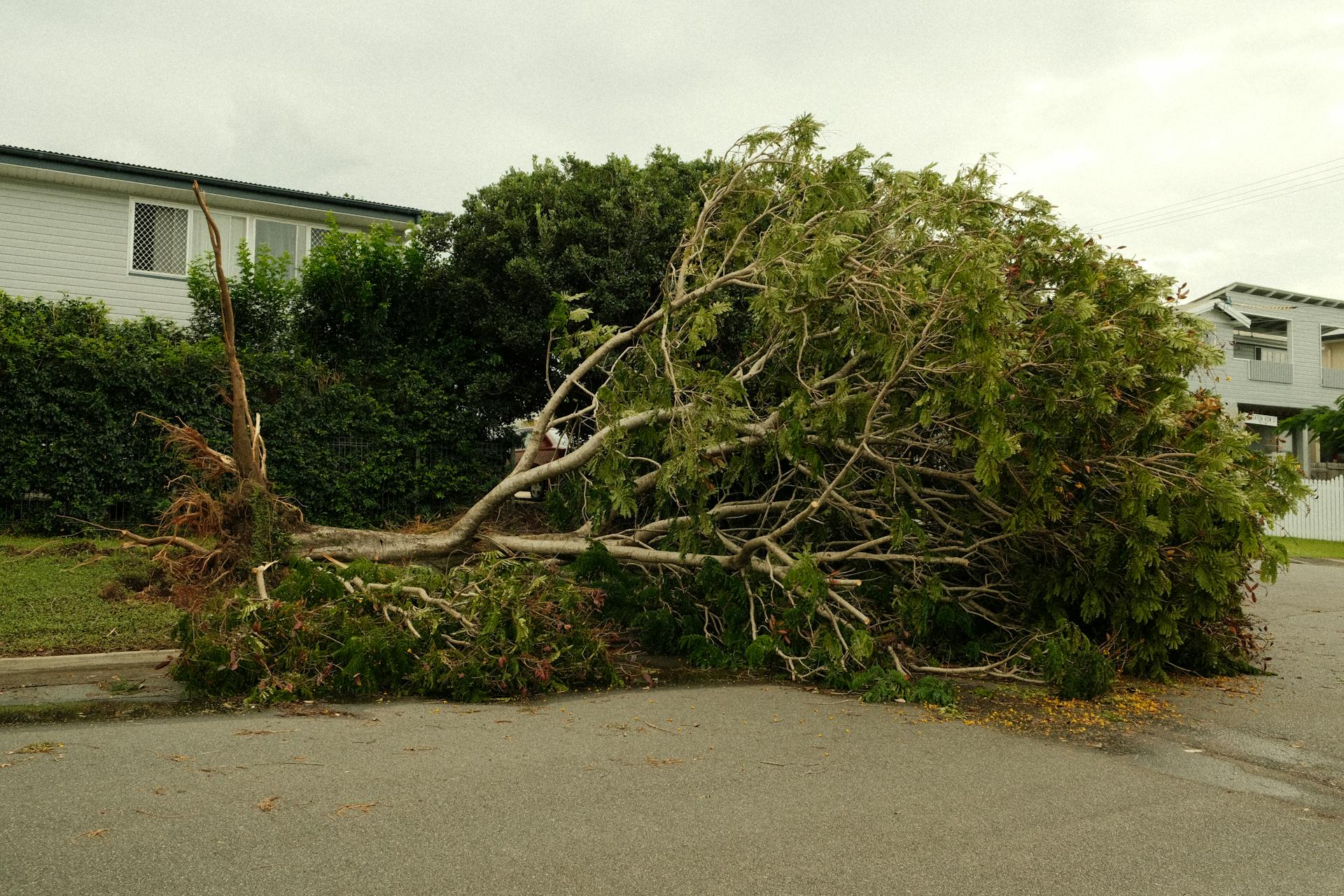
Leaning Trunks and Uprooted Trees After High Winds
When spring rains soak the ground, roots lose some of their grip. Add strong winds, and even a tree that looked stable can start to lean or lift out of the soil. This is especially common in older neighborhoods with compacted soil or in low spots that stay wet.
There is a big difference between a tree that has had a gentle lean for years and one that suddenly tilted after a storm. A fresh lean is a red flag. Warning signs include:
Soil mounded or lifted on one side of the trunk
Exposed roots that were not visible before
Cracks in the soil on the side opposite the lean
A new gap between the soil and the trunk
A leaning or partially uprooted tree can be very dangerous. The root plate and trunk may be under heavy tension. Cutting in the wrong spot can release that tension and cause the tree to shift or fall without warning. Sometimes, the tree fails days after the storm, once the ground dries and roots lose what little support they had.
This is when a professional inspection is especially important. A trained crew can decide if cabling, bracing, or corrective pruning might help, or if removal is the only safe option around:
Homes and garages
Fences and sheds
Streets and sidewalks
Neighboring properties
How Wind Damage Reveals Past Pruning and Neglect
Wind often exposes the results of what was done, or not done, years ago. Many failures do not begin in the storm. They begin with poor cuts, topping, or long periods without care.
Common signs of past issues that show up after wind include:
Clusters of weak sprouts where a tree was topped
Large dead stubs snapping off at old cut points
Branch unions splitting apart where two similar-sized stems meet
Big, dark wounds that never sealed and now break in gusts
When a tree is topped, it tries to replace lost foliage by sending up many fast, weak shoots. These sprouts have shallow attachment and are more likely to snap. Wind simply finishes what bad pruning started.
Neglected trees have other problems. Overgrown canopies catch more wind, like a giant sail. Dead wood breaks easily and can fall onto roofs, cars, or people. Crowded branches deep inside the canopy cannot move freely, so they grind and break against each other.
A long-term tree care plan can slowly fix some of this history. Regular structural pruning, removal of dead wood, and careful thinning can give the tree a stronger shape. It does not erase past damage, but it can reduce the chance of severe storm failure in the future.
Preparing Your Trees Before the Next Sioux City Storm
You do not have to wait for a storm to see how your trees might react. The best time to look at structure and health is usually early to mid-spring, before the strongest wind and heavy summer storms arrive.
A professional tree inspection typically looks at:
Canopy shape and balance
Branch unions and weak crotches
Signs of decay, cracks, or cavities
Root flare and soil conditions at the base
Clearance from buildings, driveways, and utility lines
From there, a plan can include:
Strategic pruning to reduce wind resistance
Removing dead or storm-weakened branches
Cabling or bracing vulnerable limbs in key trees
Stump grinding and removal of compromised trees before they fail
When you work with a local tree care company that knows Sioux City weather and tree species, it is easier to respond quickly after storms. The crew already understands your property, the history of your trees, and which ones are most likely to need fast help.
Turn Storm Lessons Into a Safer, Healthier Yard
Every wind event leaves clues. Instead of only raking, hauling brush, and moving on, it helps to ask what the damage is saying. Which trees lost the most branches? Where did they break? Which areas of the yard always seem to get hit the hardest?
Those answers point to the trees that may need regular pruning or future removal. They show where new trees should be planted more carefully and which species might be better choices for windy spots. Over time, using those lessons leads to a yard that bends, not breaks, when the next line of storms rolls through Sioux City.
Sioux City Tree Co. is here to read those signs with you. With professional evaluations, ongoing care, and reliable emergency tree services in Sioux City, we help turn each storm from a crisis into a chance to build a stronger, safer landscape.
Protect Your Property With Fast, Reliable Tree Help
When a storm hits or a tree starts to fail, you need quick, skilled support you can trust. At Sioux City Tree Co., we provide prompt, safety-focused emergency tree services in Sioux City to protect your home, family, and property. Our crew is ready to assess the situation, clear hazards, and stabilize problem trees as quickly as possible. If you need immediate help or want to prepare before the next storm, contact us today.

Home | Get a Quote | Privacy Policy | Contact | Blog
©2024 Sioux City Tree Co® - All rights reserved.
Created by Showcase 712