
Tree Blog
Our Blog
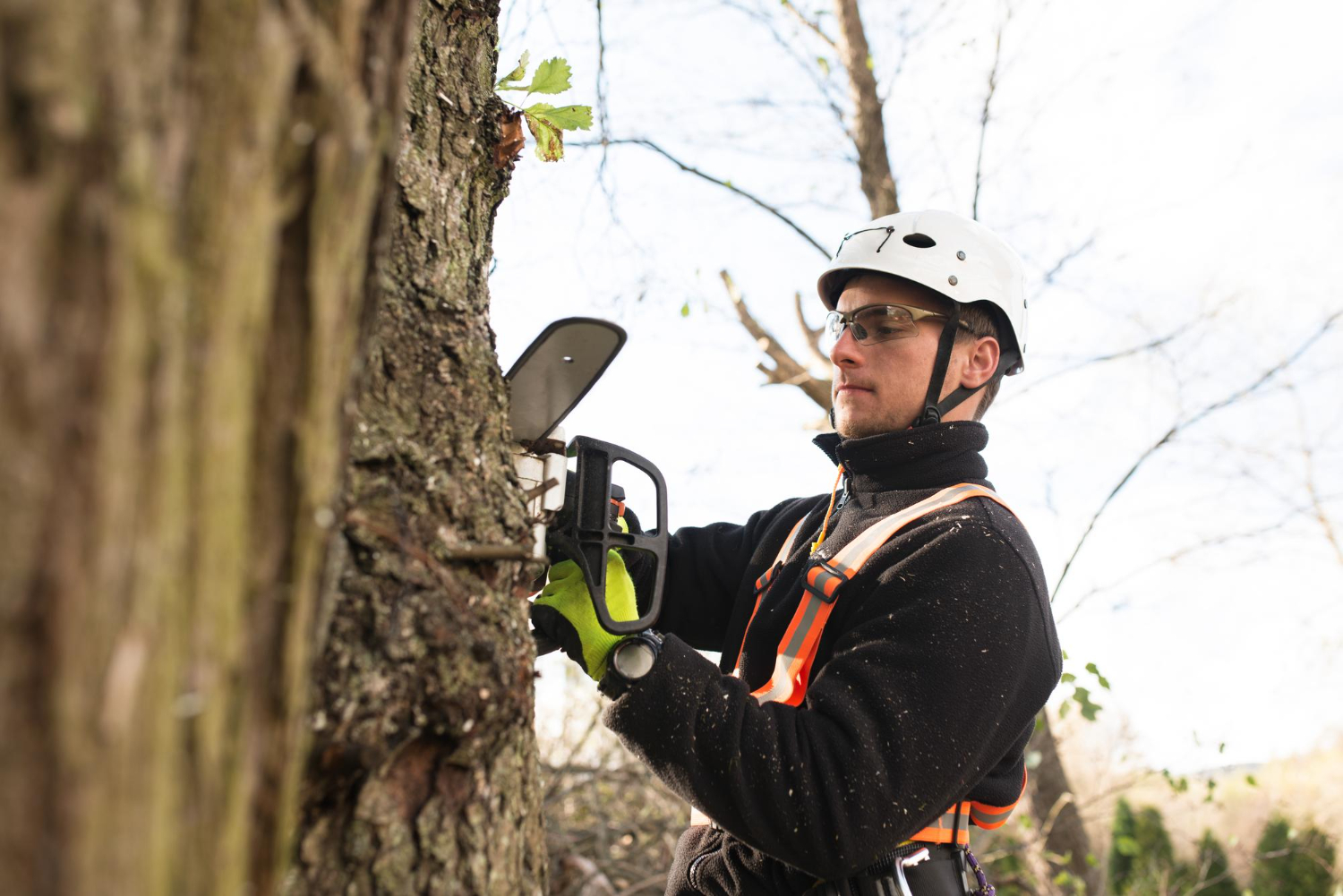
Is an Arborist in Sioux City Necessary for Routine Tree Care?
Protecting Your Trees and Your Property Year-Round
Trees around Sioux City go through a lot. We see strong river valley winds, hard freezes, ice on branches, hot dry summers, and heavy clay soil that gets packed down in our neighborhoods. All of that puts stress on roots, trunks, and limbs.
When routine care is done the wrong way, problems can show up fast. Bad pruning cuts can tear open and rot. Roots can get smothered under rock and fabric. A limb that looked “fine” in calm weather can snap onto a roof in the first winter storm. Insects and disease often move into trees that are already stressed by poor care.
So where is the line between simple upkeep and work that needs a trained eye? How do you know when you can handle a task yourself and when an arborist in Sioux City should step in? In this article, we will share what arborists actually do, what is usually safe for homeowners, and when calling a pro can protect your trees, your home, and your peace of mind.
What a Certified Arborist Really Does for Your Trees
An arborist is a tree care professional who focuses on how trees live, grow, and stay safe. Arborists study tree biology, pruning methods, soil conditions, local insects, and safe work practices around homes and power lines. Many hold credentials through groups like the International Society of Arboriculture, which means they follow set standards and keep learning over time.
Arborists do much more than just “cut branches.” Common services include:
Structural pruning to guide young and mature trees into safer shapes
Tree risk assessments to spot weak branches and poor branch unions
Soil and root evaluations to look for compaction, girdling roots, and drainage issues
Diagnosis of pests and diseases, then setting up a care plan
Long-term planning to help trees handle storms, drought, and nearby building work
In Sioux City, an experienced arborist pays special attention to common local trees like maples, ashes, elms, oaks, and many ornamental species. Each type responds differently to pruning, cold snaps, road salt, and insects. For example, emerald ash borer has changed how ash trees are managed. Storm damage and construction work can also affect how roots and trunks are treated.
There is a real difference between a general “tree cutter” and a trained arborist. A basic cutter may only focus on removing wood as fast as possible. An arborist looks at how each cut will affect the tree’s future strength, shape, and health. That matters for:
Safety around homes, cars, and play areas
How long the tree will live without becoming a hazard
Shade, curb appeal, and long-term property value
Routine Tree Care Homeowners Can Safely Handle
There are simple care steps most homeowners can handle without much risk. These small habits keep trees stronger between professional visits.
Safe DIY tasks usually include:
Deep, infrequent watering during dry spells, especially for young trees
Mulching in a wide ring, 2 to 3 inches deep, kept away from the trunk
Picking up small dead twigs that have already fallen to the ground
Looking over your trees each season for changes in leaves, bark, or branches
Some light pruning can be done safely if you stay on the ground and work on very small branches. General guidelines:
Only trim branches you can reach while standing on the ground
Avoid cutting anything thicker than your thumb
Use clean, sharp tools, and wipe blades between trees
Never top a tree or cut big limbs flat across the top
In Sioux City, a simple yearly rhythm helps:
Fall: Clean up leaves, check for deadwood, and water trees before the ground freezes if it has been dry
Winter: Watch for broken or hanging limbs after heavy snow or ice
Spring: Look for bud growth, new leaves, and early insect activity
Summer: Check for wilting, leaf scorch, and cracks after storms or dry spells
The line between smart homeowner care and risky work is clear. If a task needs a ladder, has you working overhead with a saw, involves large limbs, or is near power lines, that is not a DIY job. At that point, an arborist in Sioux City should step in to keep everyone safe.
When You Absolutely Need an Arborist in Sioux City
Some warning signs tell you it is time to bring in a professional. These issues often mean the tree could fail or is already in decline.
Call an arborist if you see:
A tree leaning more than before, especially after heavy rain or wind
Cracks in the trunk or large branches
Big dead limbs still hanging in the canopy
Mushrooms or conks growing at the base or along major roots
Sudden leaf drop, thinning canopy, or branches that stay bare in season
Limbs hanging over roofs, driveways, sidewalks, or play sets
Around autumn in Sioux City, extra risks show up as we move toward winter. Strong fall winds, early ice or wet snow, and soaked soil can all stress root systems and heavy limbs. Older or previously damaged trees are more likely to give way during this time.
An arborist will typically:
Walk around the tree and inspect the canopy, trunk, and root flare
Look for structural defects and previous bad cuts
Use proper climbing gear or bucket trucks where needed
Work with safe rigging so heavy pieces do not hit roofs, lines, or fences
Handle any needed permits and coordinate with utilities if power lines are involved
Emergency situations should never be handled by a homeowner. Storm damage, split trunks, “widowmaker” branches hanging loose, or limbs near electrical lines require training and the right equipment.
Tree Health, Safety, and the Cost of Waiting Too Long
Waiting to deal with a tree problem usually makes things harder, not easier. A limb that could have been pruned out cleanly can turn into a broken branch through a roof. A small cavity in a trunk can grow until the whole tree is hollow and unstable.
It often costs less in the long run to bring in an arborist early for:
Routine pruning before branches grow too large and heavy
Thinning crowded canopies so wind can move through safely
Catching decay, pests, or disease before they spread through the tree
Adding support systems or improving soil care when a tree is stressed but still savable
Healthy trees bring a lot of quiet value to Sioux City homes. They shade windows and yards, help keep homes cooler, and make streets more inviting. Strong, well-shaped trees are also less likely to drop limbs in storms, which means fewer surprises and fewer repair headaches.
On a bigger scale, cared-for trees help with:
Less stormwater runoff and erosion in heavy rains
Better air quality and cooler pockets in neighborhoods
A stronger, safer community tree canopy over time
How Sioux City Tree Co. Supports Year-Round Tree Care
At Sioux City Tree Co., we focus on tree care that fits our local weather, soils, and common species. Our team handles both everyday maintenance and the tougher, more complex issues that come with aging trees and Midwest storms.
Our arborist-led services include:
Pruning to improve structure, clearance, and health
Safe tree removals when a tree is beyond saving or in the wrong place
Stump grinding to clear space for new planting or lawn
Land clearing for new projects
Emergency storm work when trees or limbs come down
Honest tree health evaluations, including when a tree can be helped and when it is time to remove it
A simple fall checklist many homeowners follow is to have trees inspected before winter, prune out risky branches, address weak or diseased trees, and plan any needed removals or stump grinding before the ground freezes hard. That way, you head into winter knowing your trees have been looked at by an arborist in Sioux City who understands what our local weather can throw at them.
Protect Your Trees With Expert Care Today
If you are ready to give your trees the professional attention they need, our team at Sioux City Tree Co. is here to help. Work with a trusted arborist in Sioux City to assess, maintain, or safely remove trees on your property. We will listen to your goals, explain your options clearly, and recommend the right solution for your landscape. Have questions or want to schedule an appointment now? Just contact us and we will follow up promptly.

(605) 690-5077 | siouxcitytreeco@gmail.com
3311 S Clinton St, Sioux City, IA
Home | Get a Quote | Privacy Policy | Terms of Service | Contact | Blog
© 2026 Sioux City Tree Co. - All rights reserved.
Created by Showcase 712