
Tree Blog
Our Blog
Storm Season Prep: Tree Trimming Mistakes Sioux City Homeowners Make
Strong winds and fast storms are a normal part of life in Siouxland. High gusts, heavy rain, and wet soil can turn a weak tree into a serious hazard very quickly. Getting your trees ready ahead of time is one of the simplest ways to protect your roof, siding, vehicles, and family.
Late winter is a smart time to plan tree trimming in Sioux City. Trees are still mostly dormant, the ground is often firm or frozen, and you can clearly see the structure of the branches without leaves in the way. Ignoring tree care can lead to roof damage, torn gutters, broken fences, and even trouble with power lines and insurance claims. The truth is, much of the storm damage we see is preventable, but common trimming mistakes leave many homes at risk. As a local tree care team, we work with Sioux City weather, local tree species, and neighborhood concerns every day, so we see these problems up close.
Waiting Too Long to Schedule Tree Trimming
One of the biggest mistakes Sioux City homeowners make is waiting until a storm is already on the radar. Once high winds or heavy thunderstorms are in the forecast, it may be too late to deal with weak limbs or problem trees safely.
In our area, late winter can bring frozen ground, thawing cycles, and strong early spring winds. When you wait, you are more likely to deal with:
• Branches already bending or cracking
• Soft, wet soil that makes trees less stable
• Sudden failures during the first strong wind of the season
Proactive tree trimming in Sioux City means planning before things look scary. When you schedule early, there is time to remove weak limbs in a controlled way instead of rushing right before or after a storm. Another factor many people miss is scheduling. Good tree crews tend to book up quickly leading into the windiest months. Last-minute calls often mean longer wait times, which can leave risky branches hanging over your home or driveway longer than you would like.
Cutting Too Much or Too Little From the Canopy
Even when homeowners remember to trim, it is easy to cut the wrong amount. Both over-thinning and under-pruning can cause problems once storms roll through.
When too much is removed from the canopy, you may see:
• Weakened limbs that are more likely to snap
• Sunscald on bark that is suddenly exposed
• Fast, top-heavy regrowth that breaks more easily in high winds
On the other hand, trimming too little can leave a dense, tangled canopy. Thick tops catch more wind like a sail. Dead or crossing branches can turn into flying debris, and hidden decay can keep spreading without anyone seeing it until a big failure happens.
Proper storm-ready pruning focuses on structure. Instead of just cutting for looks, the goal is to:
• Build a strong central leader where the species allows
• Remove weak V-shaped crotches that split more easily
• Thin select areas so wind can pass through the canopy
• Clear out dead, broken, or rubbing branches
Tree trimming in Sioux City also needs to respect local species. Maples, elms, cottonwoods, and other common trees each respond differently to pruning and storms. Understanding how each one carries weight, heals cuts, and handles wind helps shape safer trees over time, not just for one season.
DIY Chainsaw Work Without a Safety Plan
Another common mistake is pulling out a chainsaw and climbing a ladder without a solid safety plan. It may look simple, but tree work involves many moving parts, and there is little room for error.
Homeowners often put themselves at risk by:
• Cutting above shoulder height while holding a running saw
• Working near power lines without checking clearances
• Standing on ladders in awkward positions with no tie-offs
• Guessing where a heavy branch will fall and being wrong
Winter and early spring bring extra hidden hazards. Icy or uneven ground makes footing tricky. Branches can be more brittle in cold weather, so they may snap suddenly instead of bending. Internal decay is hard to see from the ground, yet it can change the way a limb breaks when cut.
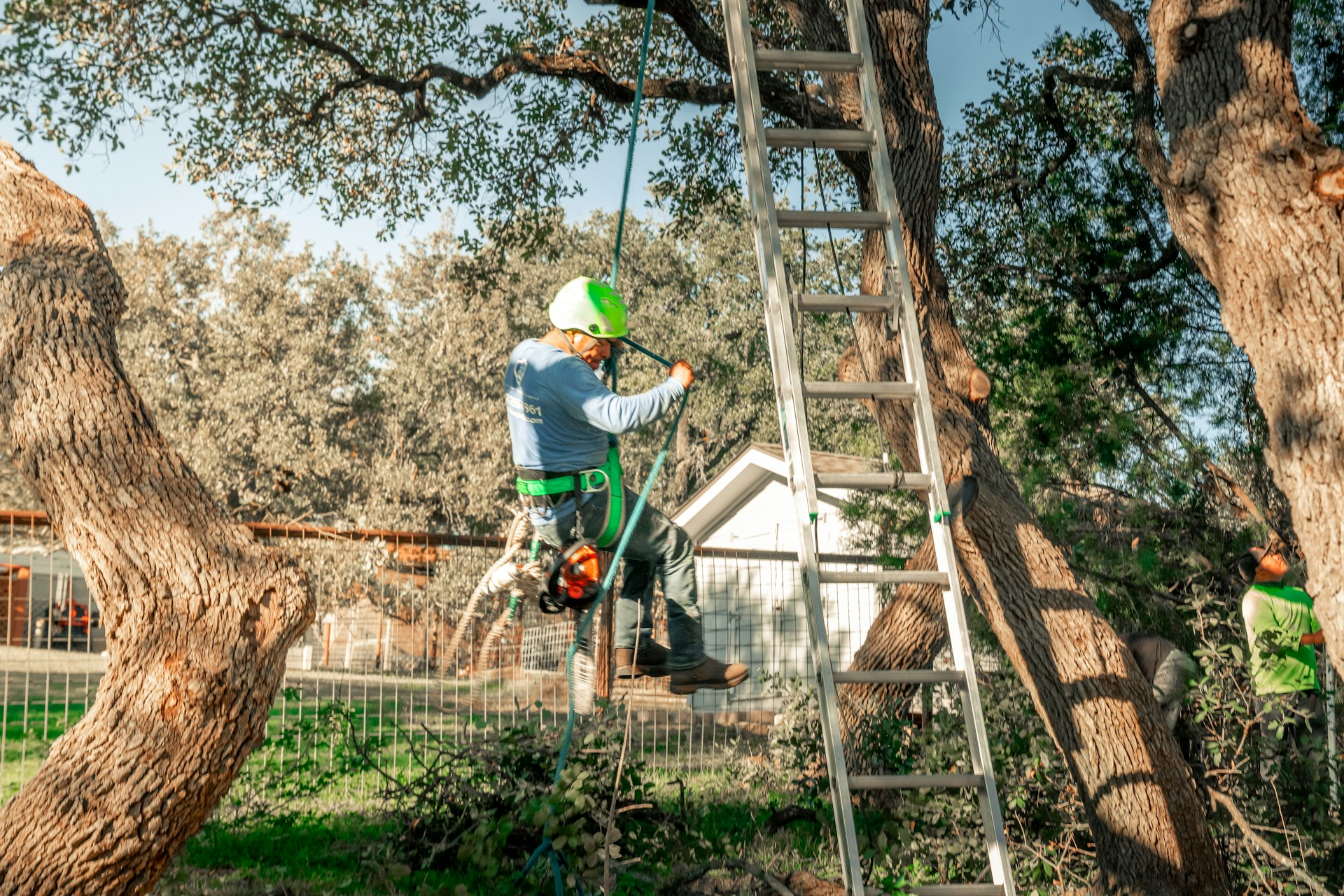
Improper cuts can cause bark to strip down the trunk, leaving big wounds that do not close well. Those wounds can later fail during the next strong wind. Professional crews use rigging, ropes, and controlled lowering methods to bring limbs down in small, safe pieces. They also use protective gear and team communication to keep people, roofs, windows, and fences out of the drop zone.
Ignoring Roots, Trunks, and Hidden Structural Issues
Many homeowners look up, see green leaves, and assume the tree is fine. But some of the most serious problems start lower, in the roots or trunk, where they are easier to miss.
Warning signs that a tree might be high-risk include:
• Mushrooms or fungal growth at the base of the trunk
• Soil that appears heaved, cracked, or lifted on one side
• Deep trunk cavities or large open wounds
• A sudden lean that was not there before
• Big dead limbs in the upper canopy
In Sioux City, we often deal with periods of saturated soil followed by strong winds. When the ground is soft and roots are decayed or damaged, even a tree that still looks green can topple faster than a healthy one. This is especially serious for trees close to homes, driveways, sheds, or play areas.
Regular professional inspections help catch these issues early. Looking at root flare, trunk alignment, and branch unions can reveal hidden structural problems before they lead to storm failures. This is not just about removing trees. It is about deciding which ones can be made safer and which ones have reached the point where removal is the safest option.
Skipping Professional Help Before Peak Storm Season
Preparing trees for storm season is more than just trimming a few branches. It is about reading the tree, judging risk, and making choices that balance safety with long-term tree health.
Working with a local tree care expert brings several benefits:
• Knowledge of city codes and typical clearance needs
• Familiarity with local utility line issues and setbacks
• Understanding of how common Siouxland storms affect different species
• Experience spotting patterns that point to higher risk trees
A smart prep timeline for our area often looks like this: schedule tree evaluations in late winter, complete structural pruning before the strongest spring storms, then reassess after any major weather event that hits your neighborhood. This cycle helps keep small problems from turning into emergency calls later.
By avoiding the most common mistakes, waiting too long, trimming too much or too little, unsafe DIY cutting, and overlooking deeper structural problems, you give your trees a much better chance of standing strong when the next Siouxland storm blows through. Sioux City Tree Co. is here to help homeowners make those decisions with clear information and focused tree care that supports both safety and healthy growth.
Protect Your Trees And Your Property With Expert Care
If your trees are overgrown, damaged, or starting to encroach on your home, our team at Sioux City Tree Co. is ready to help. Whether you need seasonal maintenance or a one-time safety check, our professional tree trimming in Sioux City will keep your trees healthy and your yard looking its best. Schedule a visit that works for you and let us handle the hard work safely and efficiently. If you are ready to get started or have questions about your trees, contact us today.

Home | Get a Quote | Privacy Policy | Contact | Blog
©2024 Sioux City Tree Co® - All rights reserved.
Created by Showcase 712